


Introduction
India has witnessed the growth of many successful companies, but few have transformed the country’s economic landscape like Reliance Industries. This Reliance case study explores how a small textile business evolved into one of the largest conglomerates in the world. Founded by Dhirubhai Ambani, Reliance is now a global powerhouse with interests in petrochemicals, telecommunications, retail, and digital services.
Understanding this Reliance case study is important for students, entrepreneurs, and business professionals who want to learn about strategic growth, innovation, and leadership. The company’s journey reflects how vision, risk-taking, and adaptability can create long-term success.
In this blog, we will analyze the history, business model, strategies, challenges, and future outlook of Reliance. This Reliance case study will give you deep insights into how the company became a market leader in multiple industries.
1. History and Foundation
The story begins in 1966 when Dhirubhai Ambani started Reliance Industries as a small textile company in Mumbai. His vision was clear—to provide high-quality products at affordable prices for the common people of India. With strong determination, innovative thinking, and a willingness to take risks, he gradually transformed a small trading business into a growing manufacturing enterprise.
In the early years, Reliance focused on textiles under the popular brand “Vimal,” which quickly gained recognition for its quality and affordability. As demand increased, the company expanded its operations and began investing in modern production techniques and infrastructure. Over time, Reliance moved beyond textiles and entered the polyester segment, which became a major success due to its cost efficiency and growing market demand.
This Reliance case study shows how the company gradually diversified its business operations. Instead of staying limited to textiles, Reliance identified new opportunities and invested heavily in infrastructure and technology.
2. Business Expansion Strategy

One of the key highlights of this Reliance case study is its aggressive expansion strategy. The company entered industries that had high growth potential and long-term demand. From oil refining to telecom, Reliance focused on sectors that could generate massive scale.
Reliance also adopted backward integration, which means controlling every step of production—from raw materials to final products. This strategy reduced costs and increased efficiency, making the company highly competitive.
3. Leadership and Vision
Leadership plays a major role in the success of any organization. In this Reliance case study, Dhirubhai Ambani’s leadership stands out as a key factor. He believed in thinking big and taking calculated risks.
After his passing, Mukesh Ambani took over and continued the legacy. Under his leadership, Reliance entered the digital era with initiatives like Jio, which revolutionized India’s telecom industry. This Reliance case study highlights how strong leadership ensures continuity and growth.
4. Reliance Jio Revolution
A major turning point in this Reliance case study was the launch of Reliance Jio in 2016, which completely transformed the Indian telecom industry. At a time when mobile data was expensive and internet access was limited for many people, Jio entered the market with a disruptive strategy by offering highly affordable data plans along with free voice calls. This bold move not only challenged existing telecom operators but also redefined how people in India used mobile services.
Jio’s entry was backed by strong infrastructure, including a nationwide 4G network, which ensured high-speed internet connectivity even in smaller towns and rural areas. This made digital services more accessible to a larger population. As a result, millions of users rapidly switched to Jio within a short period, making it one of the fastest-growing telecom networks in the world.
The impact of this revolution was massive. Competitors were forced to lower their prices, improve their service quality, and introduce better data plans to retain customers. This increased competition ultimately benefited consumers by making internet services more affordable and accessible. In addition, Jio played a crucial role in boosting India’s digital ecosystem by encouraging the use of apps, online streaming, digital payments, and e-commerce platforms.
The success of Jio clearly demonstrates how innovation, aggressive pricing, and a strong customer-centric approach can disrupt an established industry. It also highlights the importance of understanding market gaps and leveraging technology to create new opportunities. This phase of the Reliance case study stands as a powerful example of how a single strategic move can drive large-scale change and position a company as a market leader.
5. Retail Business Growth
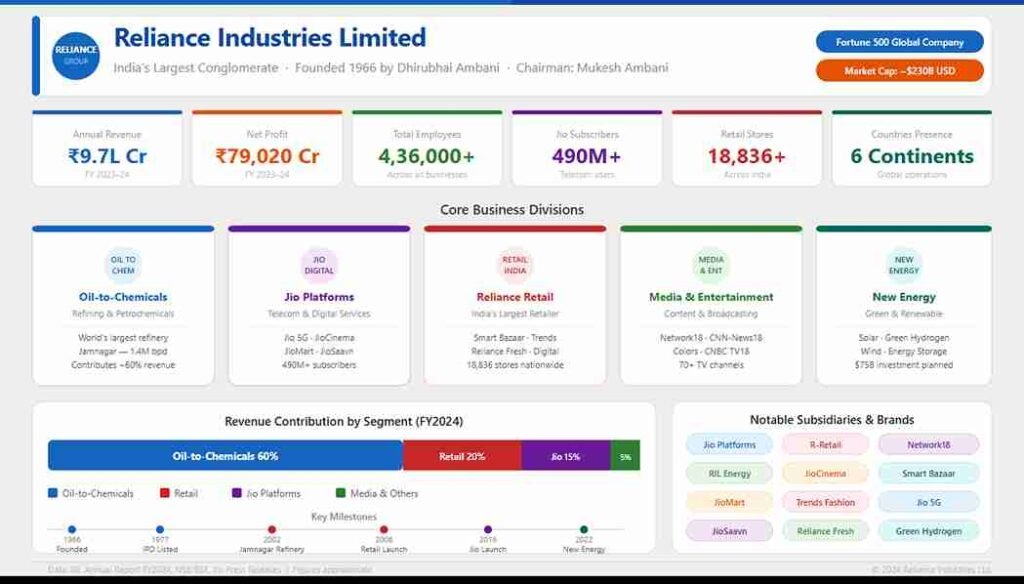
Another important aspect of this Reliance case study is the remarkable growth of Reliance Retail, which has become one of the largest and fastest-growing retail chains in India. Over the years, the company has built a massive retail network that spans across multiple segments, including groceries, fashion, electronics, lifestyle products, and daily essentials. With thousands of stores operating in cities as well as small towns, Reliance Retail has successfully created a strong presence both in urban and rural markets.
One of the key reasons behind this growth is the company’s focus on understanding customer needs and offering a wide variety of products at competitive prices. Reliance Retail operates through different store formats such as supermarkets, hypermarkets, and specialty stores, allowing it to cater to diverse customer segments. This diversified approach has strengthened its market position and made it a preferred shopping destination for millions of consumers.
In addition to physical stores, Reliance has also expanded into e-commerce and digital retail platforms, integrating online and offline shopping experiences. This omnichannel strategy enables customers to shop conveniently through mobile apps and websites while also having the option to visit nearby stores. The use of technology, supply chain efficiency, and strong vendor partnerships further supports its operations.
The success of Reliance Retail in this Reliance case study highlights how a company can scale rapidly by combining customer-centric strategies, wide product offerings, and innovative retail models. It also demonstrates the importance of adapting to changing consumer behavior, especially in an era where convenience and digital access play a major role in purchasing decisions.
By combining offline stores with online platforms, Reliance created an omnichannel retail experience. This approach helped the company reach a wider customer base and increase sales significantly.
6. Digital Transformation
In today’s world, digital transformation is essential for business growth. This Reliance case study shows how the company invested in digital platforms, data analytics, and e-commerce.
Reliance also partnered with global tech companies to strengthen its digital ecosystem. These collaborations helped the company stay ahead of competitors and adapt to changing market trends.
7. Financial Performance
Reliance Industries is known for its strong financial performance. This Reliance case study highlights how the company consistently generates high revenue and profits.
Its diversified business model reduces risk and ensures stability. Even during economic downturns, Reliance has managed to maintain growth through strategic investments and innovation.
8. Marketing and Branding Strategy
Marketing has played a crucial role in the company’s success. In this Reliance case study, we see how the brand focuses on affordability, accessibility, and trust.
Campaigns for Jio and Reliance Retail have been highly effective in attracting customers. The company uses both traditional and digital marketing strategies to build a strong brand image.
9. Challenges Faced by Reliance
No business journey is without challenges. This Reliance case study also highlights the obstacles faced by the company, including market competition, regulatory issues, and economic fluctuations.
However, Reliance has always adapted quickly to overcome these challenges. Its ability to innovate and take bold decisions has helped it stay ahead in the market.
10. Global Expansion
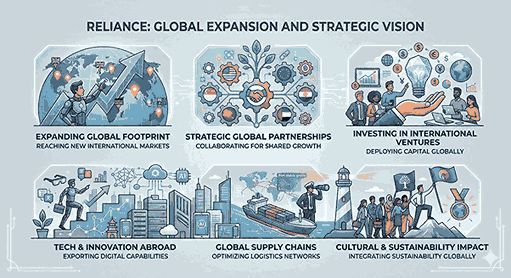
Reliance is not limited to India. This Reliance case study shows how the company is expanding globally through partnerships and investments.
By entering international markets, Reliance aims to strengthen its position as a global business leader. This expansion strategy is expected to drive future growth.
11. Sustainability and Future Goals
In recent years, Reliance has focused on sustainability and green energy. This Reliance case study highlights the company’s efforts to reduce carbon emissions and invest in renewable energy.
The company plans to become a leader in clean energy solutions which will play a major role in its future growth.
12. Key Learnings from Reliance
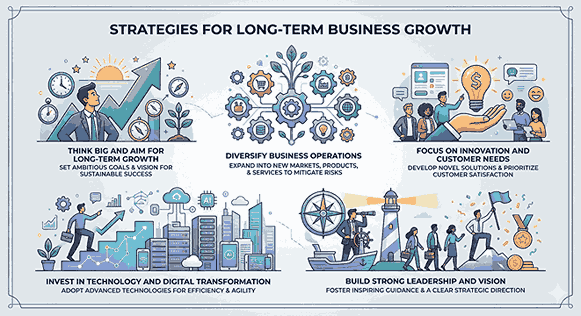
This Reliance case study offers valuable lessons for businesses and entrepreneurs:
- Think big and aim for long-term growth
- Diversify business operations
- Focus on innovation and customer needs
- Invest in technology and digital transformation
- Build strong leadership and vision
These learnings can help anyone achieve success in the competitive business world.
Conclusion
In conclusion, this Reliance case study demonstrates how a company can achieve extraordinary success through vision, strategy, and innovation. From a small textile business to a global conglomerate, Reliance has set an example for businesses worldwide.
The journey of Reliance shows that success is not achieved overnight. It requires consistent effort, adaptability, and a willingness to take risks. This Reliance case study proves that with the right approach, businesses can overcome challenges and achieve long-term growth.
As we move into the future, Reliance is expected to continue its expansion and innovation. For students and professionals, studying this Reliance case study provides valuable insights into real-world business strategies.
Understanding this Reliance case study can inspire the next generation of entrepreneurs to think big, act smart, and build successful businesses in the global market.