

Introduction
In today’s digital world, having basic computer skills is no longer enough to stand out in the job market. One of the most essential tools that professionals across industries rely on is Microsoft Excel. Understanding What is Excel and Why It’s Important for Jobs has become crucial for students, freshers, and working professionals alike.
Excel is not just a spreadsheet tool; it is a powerful software that helps in organizing, analyzing, and managing data efficiently. From small businesses to large corporations, Excel plays a vital role in decision-making and daily operations. This is why the topic What is Excel and Why It’s Important for Jobs is highly relevant today.
Whether you are applying for a job in finance, marketing, data analytics, or administration, Excel skills can significantly boost your chances of getting hired. In this blog, we will explore What is Excel and Why It’s Important for Jobs, its features, benefits, and how it impacts your career growth.
What is Excel?
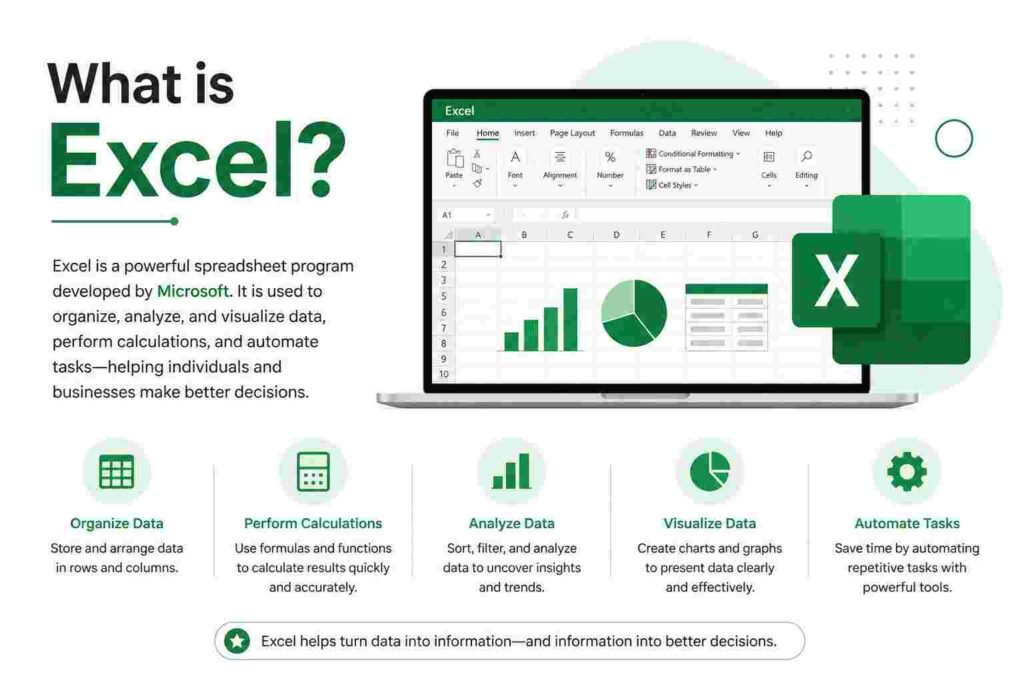
To understand What is Excel and Why It’s Important for Jobs, we must first know what Excel actually is. Microsoft Excel is a spreadsheet program developed by Microsoft that allows users to store, organize, and analyze data in a structured format.
Excel uses rows and columns to create worksheets, making it easy to manage large amounts of information. Users can perform calculations, create charts, and automate tasks using formulas and functions. This flexibility makes Excel a must-have skill in today’s workplace.
When discussing What is Excel and Why It’s Important for Jobs, it is important to note that Excel is used in almost every industry, from education to healthcare and from finance to retail.
Key Features of Excel
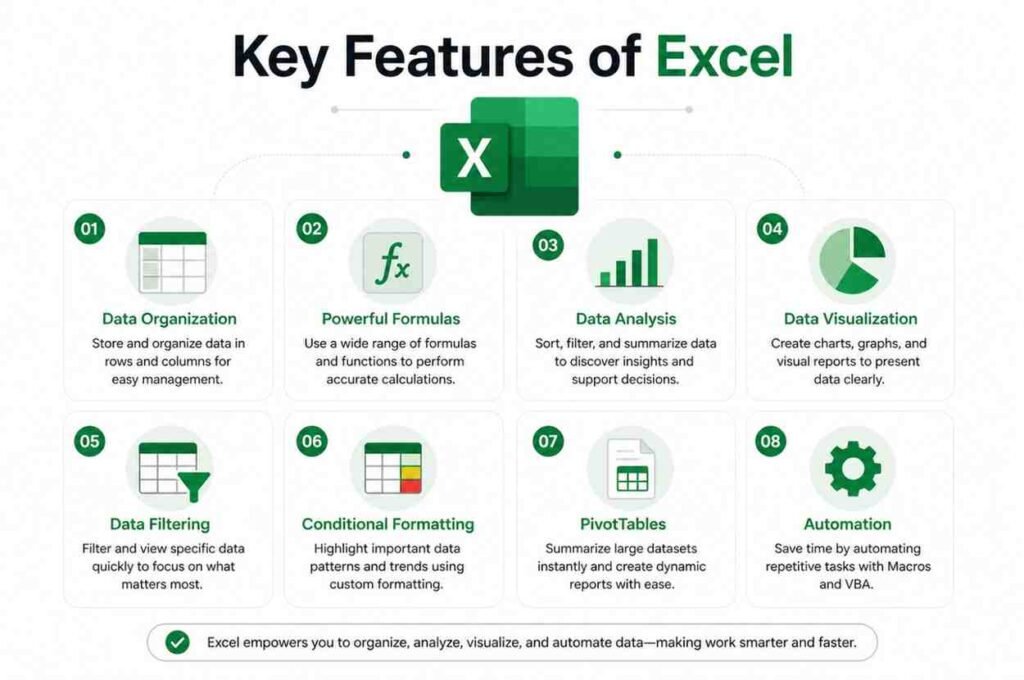
Key Features of Excel help users clearly understand What is Excel and Why It’s Important for Jobs. It offers powerful tools like data organization, formulas, charts, and analysis features, making it easier to manage information, improve productivity, and support better decision-making in various professional roles.
1. Data Organization
Excel allows users to organize data efficiently in a clean, structured format using rows and columns, making it easier to manage, analyze, and interpret large sets of information accurately.
2. Formulas and Functions
Excel offers powerful formulas such as SUM, AVERAGE, IF, and VLOOKUP, making calculations faster, more accurate, and easier to perform when handling large datasets in professional tasks.
3. Charts and Graphs
Users can create charts and graphs to visually represent data, making it easier to identify trends, compare values, and understand patterns for better analysis and decision-making.
4. Data Analysis Tools
Features like Pivot Tables and the Data Analysis Toolpak enable users to perform advanced data analysis, uncover insights, summarize large datasets, and make informed decisions efficiently and accurately.
5. Automation
Excel enables automation through macros, allowing users to perform repetitive tasks quickly and efficiently, saving time, reducing manual effort, and improving overall productivity in daily work operations.
These features clearly explain What is Excel and Why It’s Important for Jobs in modern workplaces.
Why Excel is Important for Jobs
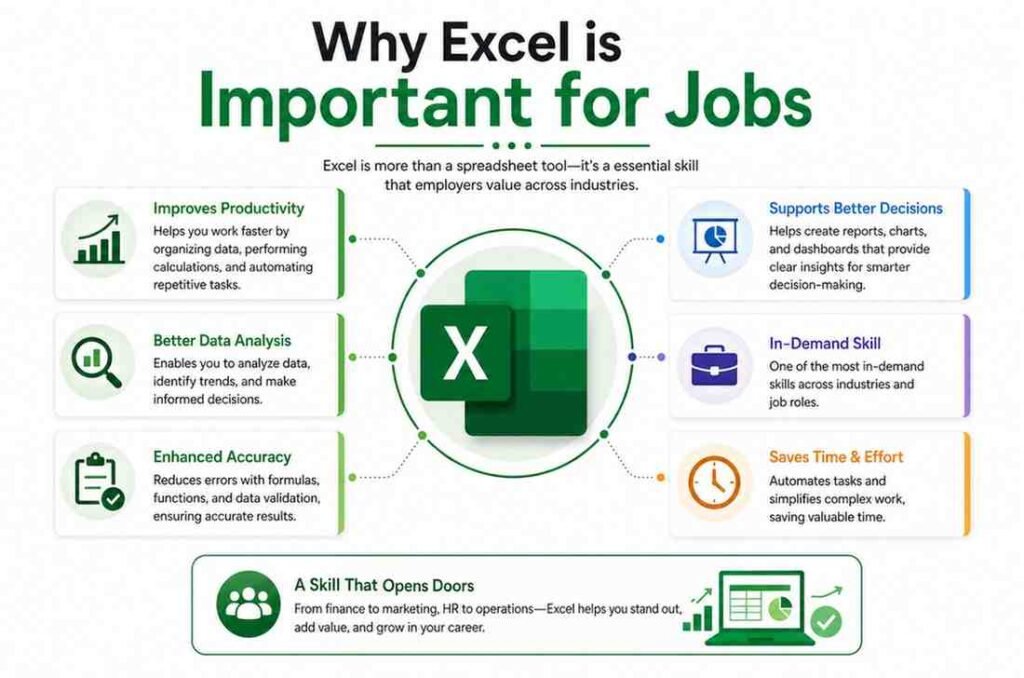
Understanding What is Excel and Why It’s Important for Jobs becomes easier when we look at its practical applications in the workplace.
1. Widely Used Across Industries
Excel is widely used in finance, marketing, HR, sales, and many other industries, making it a highly valuable and versatile skill that enhances efficiency, data management, and decision-making in various professional roles.
2. Improves Productivity
Excel helps manage tasks efficiently by organizing data, automating repetitive work, and reducing manual effort, ultimately saving time and improving productivity in daily professional activities.
3. Data-Driven Decision Making
Companies rely heavily on data to make informed decisions, and Excel plays a crucial role in analyzing, organizing, and interpreting that data effectively for better business outcomes and strategic planning.
4. Enhances Employability
Candidates with Excel skills are often preferred by employers because they can handle data efficiently, perform analysis, and improve productivity. This clearly highlights What is Excel and Why It’s Important for Jobs in today’s competitive and skill-driven job market.
5. Supports Career Growth
Advanced Excel skills can open doors to better job roles, increased responsibilities, and higher salaries by enabling professionals to analyze data effectively, automate tasks, and support informed business decisions.
Excel Skills Required for Jobs
To fully understand What is Excel and Why It’s Important for Jobs, you should know the skills employers look for:
• Basic data entry and formatting
• Use of formulas and functions
• Creating charts and graphs
• Working with Pivot Tables
• Data cleaning and sorting
• Basic automation using macros
Having these skills can make you job-ready and improve your career prospects.
Jobs That Require Excel Skills
The importance of What is Excel and Why It’s Important for Jobs is clearly reflected in the wide range of roles that require Excel knowledge, from data analysts and accountants to marketing and HR professionals, making it an essential skill across multiple industries in today’s job market.
1. Data Analyst
Excel is used for analyzing and interpreting data.
2. Accountant
Managing financial data and reports requires Excel.
3. Marketing Executive
Excel helps in tracking campaigns and analyzing performance.
4. HR Executive
Employee data and payroll management are done using Excel.
5. Business Analyst
Excel is used for forecasting and decision-making.
These roles clearly show What is Excel and Why It’s Important for Jobs in different industries.
Advantages of Learning Excel
Learning Microsoft Excel offers numerous benefits, especially for students and professionals. It helps organize data, perform calculations, and create reports efficiently. Excel is widely used in offices, making it a valuable skill for improving productivity and accuracy in daily work tasks.
Excel is important for jobs because it supports data analysis, financial planning, and decision-making. Employers prefer candidates with Excel skills as it saves time and improves efficiency. Knowledge of Excel increases job opportunities in fields like accounting, business, and data management.
1. Easy to Learn
Excel has a user-friendly interface, making it easy for beginners.
2. High Demand
Excel skills are in demand across various industries.
3. Cost-Effective Learning
Many free and affordable courses are available online.
4. Versatility
Excel can be used for multiple purposes, from simple calculations to complex data analysis.
5. Career Advancement
Excel skills can help you grow professionally and secure better opportunities.
Excel vs Other Tools
While there are many tools available today, Excel still holds a strong position. Understanding What is Excel and Why It’s Important for Jobs also involves comparing it with other tools.
• Excel is easier to learn compared to advanced tools like Python or SQL.
• It is widely accepted and used globally.
• It is suitable for both beginners and professionals.
Even with the rise of advanced technologies, Excel remains a foundational skill.
How to Learn Excel
If you want to understand What is Excel and Why It’s Important for Jobs, you should start learning it:
1. Online Courses
Platforms like Coursera, Udemy, and YouTube offer Excel tutorials.
2. Practice Regularly
Hands-on practice is the best way to learn Excel.
3. Work on Real Projects
Apply your skills to real-world scenarios.
4. Learn Advanced Features
Once comfortable, explore advanced tools like Pivot Tables and macros.
Future Scope of Excel
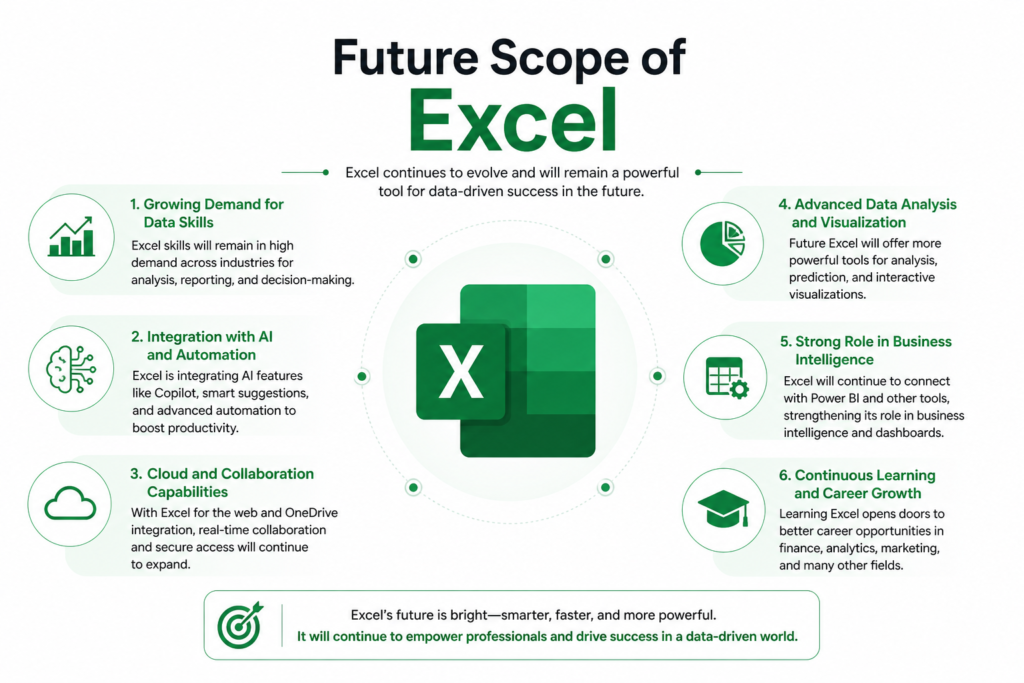
The future scope of Microsoft Excel remains highly promising as it continues to evolve with modern technological trends. Excel is no longer limited to basic calculations; it now includes advanced tools like Power Query, Power Pivot, and integration with programming languages such as Python. These features enable users to perform complex data analysis efficiently. With the growing importance of data-driven decision-making in businesses, Excel remains a widely accessible and cost-effective tool for professionals across industries, especially in finance, marketing, and operations.
Another major factor shaping Excel’s future is its integration with cloud-based platforms like Microsoft 365. This allows real-time collaboration, making it easier for teams to work together from different locations. Additionally, the incorporation of artificial intelligence features—such as data insights, forecasting tools, and automation—reduces manual effort and increases productivity. As digital transformation continues, Excel is expected to remain a vital tool, bridging the gap between basic data handling and advanced analytics.
The relevance of What is Excel and Why It’s Important for Jobs will continue in the future. Even with the growth of data analytics tools, Excel remains a basic requirement in most jobs.
Companies will always need professionals who can handle data efficiently. Excel serves as a foundation for learning advanced tools like Power BI, Tableau, and programming languages.
Conclusion
In conclusion, understanding What is Excel and Why It’s Important for Jobs is essential for anyone looking to build a successful career. Excel is a powerful tool that helps in data management, analysis, and decision-making. It is widely used across industries and offers numerous career opportunities.
While advanced tools are emerging, Excel continues to be a fundamental skill that every professional should have. By learning Excel, you can improve your productivity, enhance your employability, and achieve career growth.
Ultimately, What is Excel and Why It’s Important for Jobs is not just a topic of discussion but a practical skill that can shape your future. Investing time in learning Excel is one of the smartest decisions you can make for your career.