

Introduction
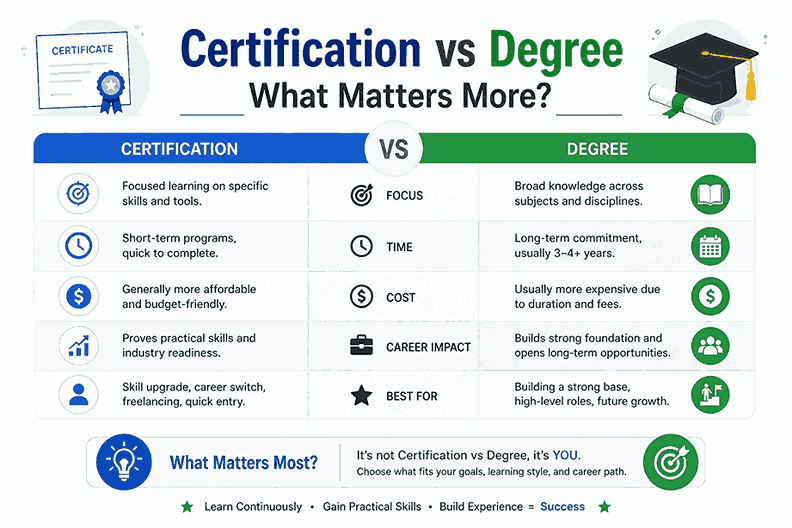
In today’s competitive job market, students and professionals often find themselves confused about the best path to build a successful career. One of the most debated topics is Certification vs Degree What Matters More. With the rise of online learning platforms, short-term certifications, and skill-based hiring trends, traditional degrees are no longer the only option.
A few decades ago, having a college degree was considered essential for securing a good job. However, the modern workforce has evolved. Employers now focus more on practical skills, hands-on experience, and industry-relevant knowledge. This shift has made the discussion around Certification vs Degree What Matters More even more important.
Both certifications and degrees have their own advantages and limitations, making it important to choose wisely based on your career path. Degrees provide a strong academic foundation, in-depth knowledge, and long-term credibility that is widely recognized across industries. They also help in developing critical thinking, research abilities, and a broader understanding of subjects. On the other hand, certifications focus on practical skills, allowing individuals to gain job-ready expertise in a shorter time. They are often more affordable and flexible, making them ideal for quick career entry or skill upgrades. Choosing between them depends on your career goals, financial situation, learning preferences, and the industry you want to enter, as both can play a valuable role in professional growth.
In this blog, we will explore Certification vs Degree What Matters More in detail, comparing their benefits, drawbacks, career impact, and future relevance to help you make the right decision.
Understanding Degrees
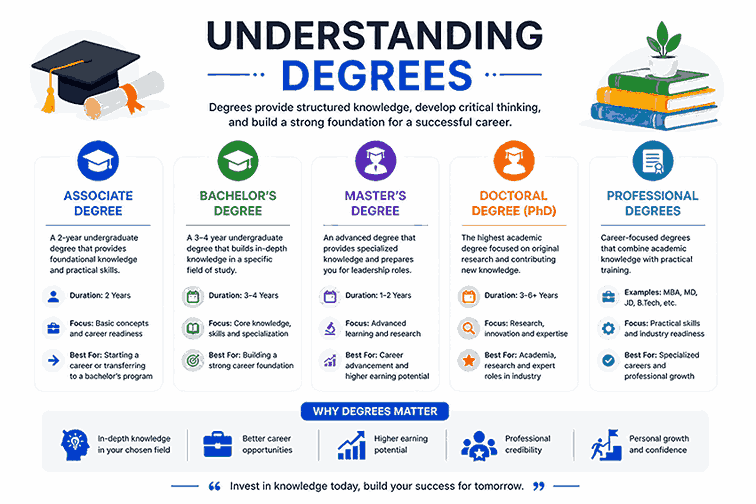
A degree is a formal qualification awarded by universities or colleges after completing a structured academic program. These programs are designed to provide in-depth theoretical and practical knowledge in a specific field. Typically, undergraduate degrees take 3 to 4 years, while postgraduate degrees require 1 to 2 years to complete, depending on the course and specialization.
Degrees focus on theoretical knowledge, critical thinking, and a comprehensive understanding of a subject. They are widely recognized and often required for professions like engineering, medicine, law, and education.
Advantages of Degrees
One major advantage of a degree is credibility. Employers often trust candidates with formal education because it shows commitment and discipline. When discussing Certification vs Degree What Matters More, degrees still hold strong value in traditional industries.
Degrees also provide a broader perspective. Students learn not only technical knowledge but also communication, teamwork, and problem-solving skills. Additionally, many government jobs and corporate roles require a degree as a minimum qualification.
Limitations of Degrees
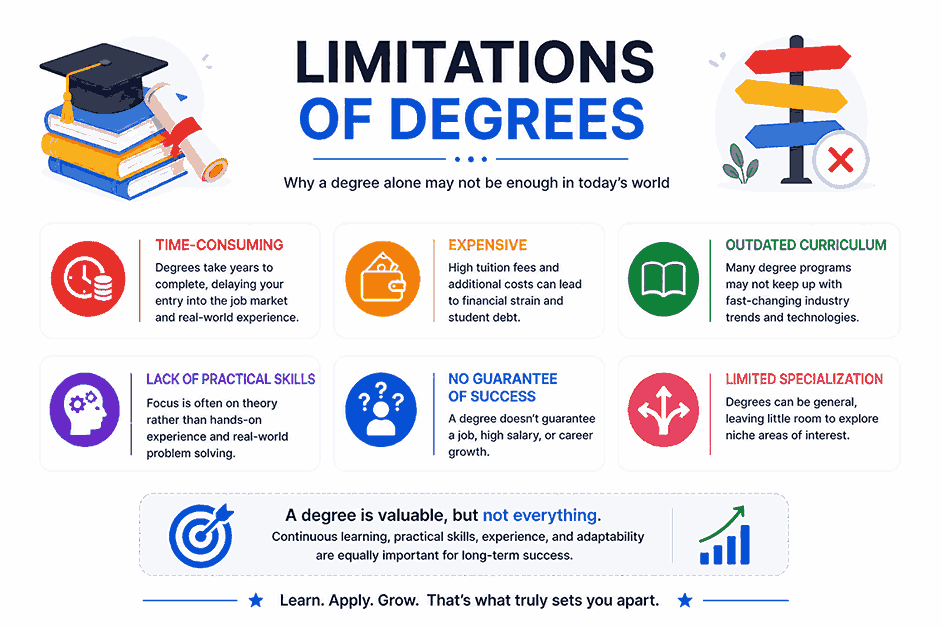
Despite their importance, degrees can be time-consuming and expensive. Many students spend years studying without gaining practical skills. This is where the debate of Certification vs Degree What Matters More becomes relevant again.
Another drawback is that some degree programs may not be updated according to current industry trends. This can create a gap between academic learning and real-world job requirements.
Understanding Certifications
Certifications are short-term courses designed to teach specific skills. They are often industry-focused and can be completed in a few weeks or months. Popular certifications include digital marketing, data analytics, graphic design, and programming.
With the increasing demand for skilled professionals, certifications have gained popularity. Many companies now value practical skills over formal education, making Certification vs Degree What Matters More a trending topic. Popular certifications include digital marketing, data analytics, graphic design, and programming.
Advantages of Certifications
Certifications are cost-effective and time-saving. They allow individuals to learn job-ready skills quickly. For students who want to start earning early, certifications can be a great option.
Another key benefit is flexibility. Many certification courses are available online, allowing learners to study at their own pace. In the discussion of Certification vs Degree What Matters More, certifications clearly win in terms of accessibility and speed.
Certifications are also highly practical. They focus on real-world applications, tools, and technologies used in the industry.
Limitations of Certifications
However, certifications may not always carry the same weight as degrees in every industry or job role. Many employers, especially in traditional sectors, still prefer candidates who have completed formal education from recognized universities. This preference makes the discussion of Certification vs Degree What Matters More more complex, as both qualifications serve different purposes. Certifications focus on specific skills, but they may lack the broader academic foundation that degrees provide.
Additionally, not all certifications are recognized or valued globally. The credibility of a certification largely depends on the institution or platform offering it, as well as its relevance in the current job market. Some certifications may become outdated quickly if they are not aligned with industry trends. As a result, candidates must carefully choose certifications that are reputable, up-to-date, and in demand. This further adds to the ongoing debate of Certification vs Degree What Matters More in today’s competitive professional landscape.
Key Differences Between Certification and Degree
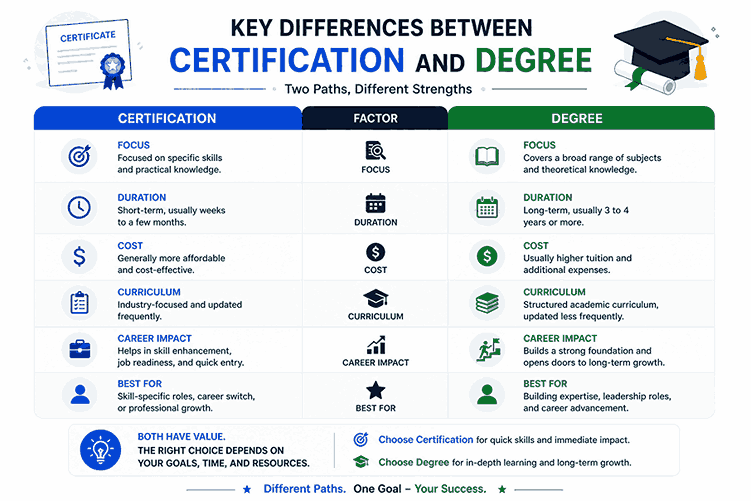
To better understand Certification vs Degree What Matters More, let’s compare them based on key factors:
1. Duration
Degrees take several years to complete, while certifications can be completed in a short time. This makes certifications ideal for quick career entry.
2. Cost
Degrees are generally more expensive compared to certifications. Certifications are budget-friendly and accessible to a larger audience.
3. Focus
Degrees focus on theoretical knowledge, whereas certifications focus on practical skills. This difference plays a major role in deciding Certification vs Degree What Matters More.
4. Career Opportunities
Degrees open doors to a wide range of careers, especially in traditional fields. Certifications are more suitable for skill-based and modern industries.
5. Flexibility
Certifications offer more flexibility, especially online courses. Degrees require a fixed schedule and physical attendance in many cases.
Industry Perspective
Different industries have different requirements. In fields like medicine, law, and engineering, degrees are mandatory. In such cases, the debate of Certification vs Degree What Matters More clearly favors degrees.
On the other hand, industries like digital marketing, IT, and design prioritize skills over formal education. Here, certifications can be more valuable.
For example, a digital marketer with relevant certifications and experience may be preferred over a candidate with a general degree. This shows how Certification vs Degree What Matters More depends on the industry. design prioritize skills over formal education.
Career Goals and Personal Choice
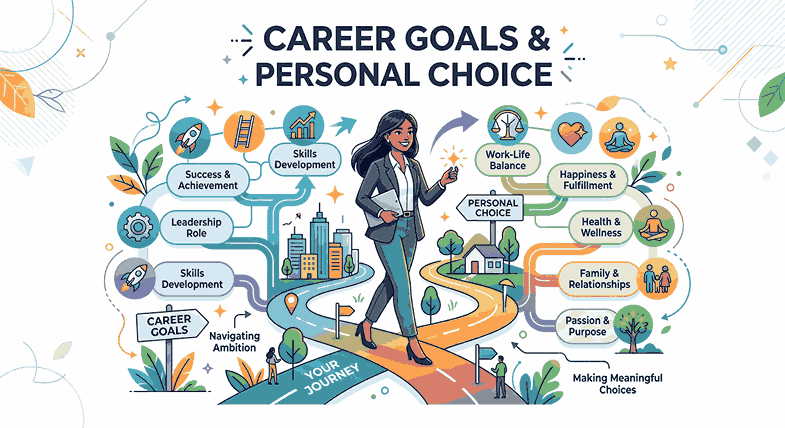
Your career goals play a crucial role in deciding Certification vs Degree What Matters More. If you aim for a long-term professional career in a structured field, a degree is a essential.
However, if you want to enter the workforce quickly or switch careers, certifications can be a better option. Many professionals today combine both degrees and certifications to maximize their opportunities.
For instance, a student with a business degree can enhance their profile with certifications in digital marketing or data analytics. This combination strengthens the argument around Certification vs Degree What Matters More by showing that both can complement each other.
The Rise of Skill-Based Hiring
Modern companies are shifting towards skill-based hiring. Employers now focus on what you can do rather than what you have studied. This trend has significantly influenced the discussion of Certification vs Degree What Matters More.
The debate around Certification vs Degree What Matters More continues to evolve as the job market becomes increasingly skill-driven. Platforms like LinkedIn and other online job portals now emphasize skills, portfolios, and real-world experience over traditional qualifications. This shift has created more opportunities for candidates who have completed certifications and gained hands-on expertise in their chosen field. Employers are actively seeking individuals who can demonstrate practical abilities and deliver results from day one.
At the same time, degrees still hold significant value in many industries. They provide a strong academic foundation, critical thinking abilities, and are often a minimum requirement for senior or specialized roles. Many organizations view degrees as proof of discipline and long-term commitment. Because of this, the discussion of Certification vs Degree What Matters More remains relevant, as both options offer unique advantages and continue to complement each other in today’s competitive professional landscape.
Which One Should You Choose?
There is no one-size-fits-all answer to Certification vs Degree What Matters More. The right choice depends on your situation.
- Choose a degree if you want a stable, long-term career in a traditional field.
- Choose a certification if you want quick skills and job opportunities.
- Choose both if you want the best of both worlds.
Combining a degree with relevant certifications can significantly boost your employability and career growth.
Conclusion
The debate of Certification vs Degree What Matters More is not about choosing one over the other but understanding their value in different contexts. Degrees provide a strong academic foundation, credibility, and long-term career stability. Certifications, on the other hand, offer practical skills, flexibility, and quick entry into the job market.
In today’s dynamic world, the smartest approach is to adapt and stay updated. Instead of limiting yourself to one path, consider combining both degrees and certifications to stay competitive.
Ultimately, Certification vs Degree What Matters More depends on your goals, industry, and personal preferences. By making an informed decision, you can build a successful and fulfilling career.