

Introduction
In today’s digital world, data has become one of the most valuable assets for businesses. Organizations collect massive amounts of information every day from websites, social media platforms, mobile apps, customer transactions, and connected devices. However, collecting data alone is not enough. Businesses need professionals who can analyze, interpret, and transform this data into actionable insights.
This is where the debate of Data Analytics and Data Science becomes important. Many students, professionals, and business owners often confuse these two fields because they both involve working with data. While they share some similarities, their objectives, tools, techniques, and career paths are significantly different.
In this blog, we will explore Data Analytics and Data Science, understand their roles, compare required skills, discuss tools used by professionals, and help you decide which career path may be right for you.

What Is Data Analytics?
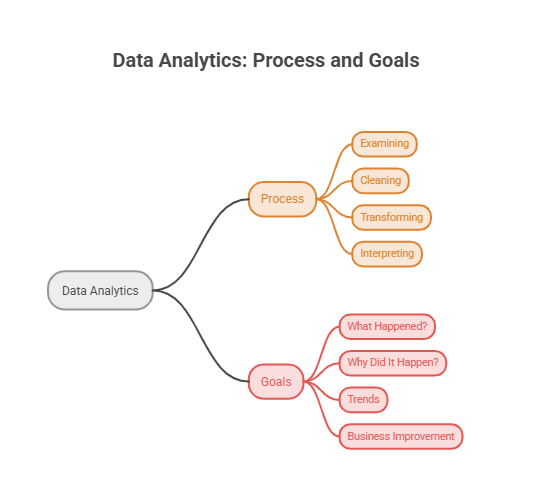
Data Analytics is the process of examining, cleaning, transforming, and interpreting data to identify useful information and support business decisions. Data analysts focus on understanding historical data and current trends.
Their primary goal is to answer questions such as:
- What happened?
- Why did it happen?
- What trends can be observed?
- How can business performance be improved?
For example, an e-commerce company may use data analytics to determine which products generate the highest sales during holiday seasons.
Example of Data Analytics
Suppose a retail store notices a drop in sales. A data analyst studies sales reports, customer behavior, and seasonal trends to identify the cause and recommend solutions.
What Is Data Science?
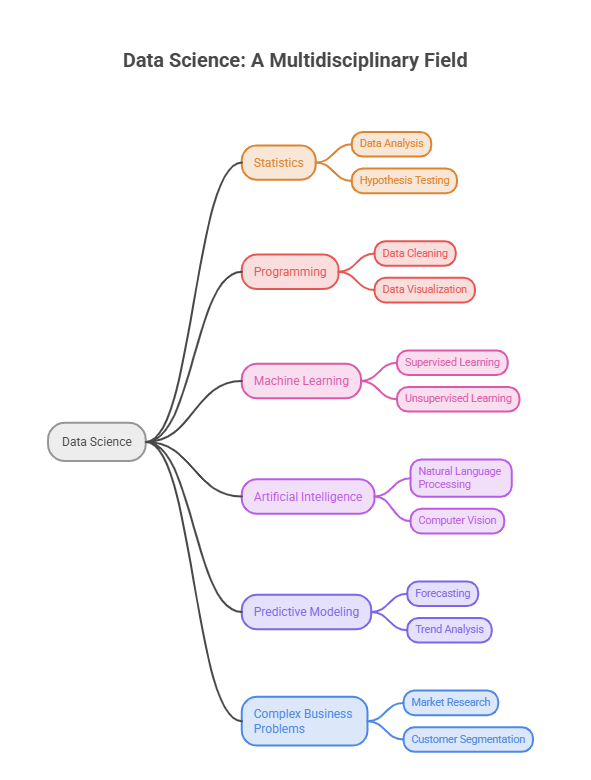
Data Science is a broader field that combines statistics, programming, machine learning, and artificial intelligence to predict future outcomes and solve complex business problems.
Data scientists not only analyze existing data but also create predictive models that help organizations forecast future events.
Typical questions answered by data science include:
- What will happen in the future?
- How can future outcomes be predicted?
- What patterns are hidden within large datasets?
Example of Data Science
A streaming platform like Netflix uses data science to recommend movies and TV shows based on user preferences and viewing history.
Data Analytics vs Data Science: Key Differences Explained
Understanding Data Analytics and Data Science requires examining several important factors.
| Factor | Data Analytics | Data Science |
| Primary Goal | Analyze past data | Predict future outcomes |
| Focus | Business insights | Predictive modeling |
| Complexity | Moderate | Advanced |
| Programming | Basic to Intermediate | Advanced |
| Machine Learning | Limited | Extensive |
| Data Type | Structured Data | Structured and Unstructured Data |
| Output | Reports and Dashboards | Predictive Models and Algorithms |
This comparison clearly highlights the central concept of Data Analytics and Data Science.
Why Is Understanding Data Analytics and Data Science Explained Important?
Many students enter these fields without understanding their differences. Knowing the distinction helps individuals:
- Choose the right career path
- Develop relevant skills
- Select appropriate certifications
- Understand industry demands
- Improve job opportunities
As organizations increasingly rely on data-driven decision-making, understanding Data Analytics and Data Science becomes essential.
What Skills Are Needed for Data Science and Data Analytics?
Skills represent one of the biggest aspects of Data Analytics and Data Science.
Skills Required for Data Analytics
A data analyst typically needs:
- Microsoft Excel
- SQL
- Data Visualization
- Statistical Analysis
- Business Intelligence
- Communication Skills
- Problem-Solving
Skills Required for Data Science
A data scientist requires:
- Python
- R Programming
- Machine Learning
- Deep Learning
- Data Engineering
- Advanced Statistics
- Artificial Intelligence
- Big Data Technologies
Data science generally demands stronger technical and programming abilities than data analytics.
Which Tools Are Used in Data Analytics?
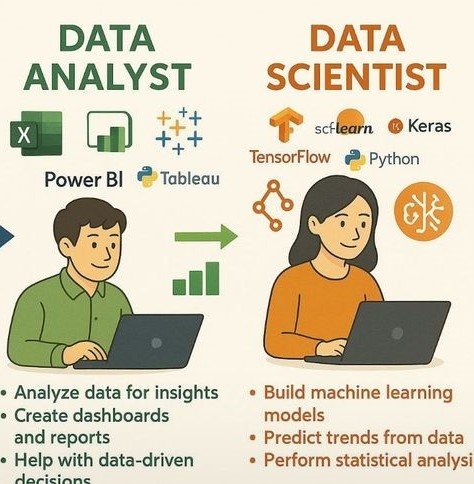
The tools used in data analytics focus on reporting, visualization, and business intelligence.
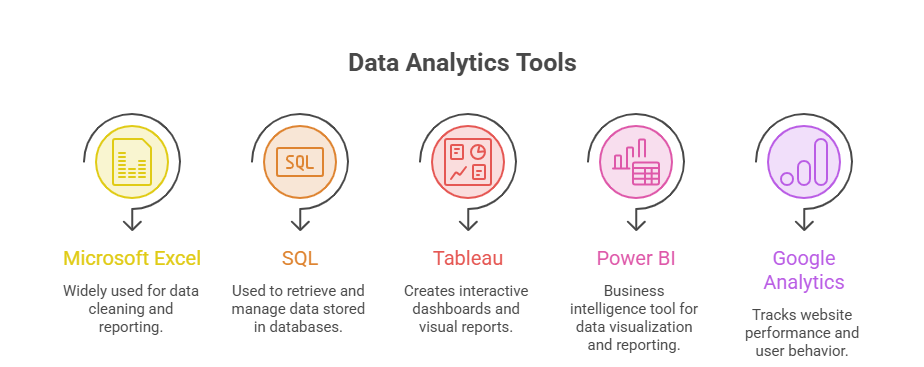
Popular Data Analytics Tool:
1.Microsoft Excel One of the most widely used tools for data cleaning and reporting.
2.SQL Used to retrieve and manage data stored in databases.
3.Tableau Creates interactive dashboards and visual reports.
4.Power BI A business intelligence tool used for data visualization and reporting.
5.Google Analytics Helps businesses track website performance and user behavior.
These tools play a significant role when discussing Data Analytics and Data Science.
Which Tools Are Used in Data Science?
Data science involves advanced tools capable of handling large-scale datasets and predictive modeling.
Popular Data Science Tools:
Python
The most popular programming language in data science.
R
Widely used for statistical computing and analysis.
TensorFlow
Used for machine learning and deep learning applications.
Apache Spark
Processes large datasets efficiently.
Jupyter Notebook
Provides an interactive environment for coding and data analysis.
These tools highlight another important aspect of Data Analytics and Data Science.
How Do Job Roles Differ in Data Analytics and Data Science Explained?
Although both fields involve data, job responsibilities differ significantly.
Data Analyst Responsibilities
- Collect data
- Clean datasets
- Create dashboards
- Generate reports
- Identify business trends
- Support decision-making
Data Scientist Responsibilities
- Build machine learning models
- Predict future outcomes
- Develop algorithms
- Analyze large datasets
- Automate decision processes
- Conduct advanced research
This distinction forms a major component of Data Analytics and Data Science.
Which Career Is Better for Beginners?
One of the most common questions regarding Data Analytics and Data Science is choosing the right starting point.
Why Data Analytics Is Better for Beginners
Data analytics is often easier to enter because:
- Requires less programming
- Offers faster learning curves
- Has numerous entry-level roles
- Uses more business-focused tools
Why Data Science May Be Challenging for Beginners
Data science often requires:
- Strong mathematics
- Advanced statistics
- Programming expertise
- Machine learning knowledge
Therefore, many professionals begin as data analysts before transitioning into data science.
What Industries Use Data Analytics and Data Science?
Both fields are valuable across various industries.
Industries Using Data Analytics
- Retail
- Marketing
- Finance
- Banking
- Healthcare
- E-commerce
Industries Using Data Science
- Artificial Intelligence
- Technology
- Healthcare Research
- Autonomous Vehicles
- Cybersecurity
- Financial Forecasting
The growing adoption of data technologies makes Data Analytics vs Data Science: Key Differences Explained increasingly relevant across industries.
What Are the Salary Differences?
Salary is another important consideration in Data Analytics vs Data Science: Key Differences Explained.
Data Analyst Salary
Data analysts generally earn competitive salaries depending on experience, location, and industry.
Data Scientist Salary
Data scientists often earn higher salaries because of their advanced technical expertise and specialized skills.
Organizations highly value professionals who can create predictive models and generate future insights.
How Does Artificial Intelligence Impact Data Science and Data Analytics?
Artificial Intelligence is transforming both fields.
AI in Data Analytics
AI helps analysts:
- Automate reporting
- Identify trends faster
- Improve data visualization
- Generate insights efficiently
AI in Data Science
AI enables scientists to:
- Build intelligent models
- Enhance predictions
- Develop recommendation systems
- Automate decision-making
AI continues to reshape the discussion around Data Analytics and Data Science.
What Are the Challenges in Data Analytics and Data Science?
Challenges in Data Analytics
- Poor data quality
- Data integration issues
- Limited historical records
- Interpretation errors
Challenges in Data Science
- Complex algorithms
- Large datasets
- High computational requirements
- Model bias
- Data privacy concerns
Understanding these challenges further clarifies Data Analytics and Data Science.
Future Trends in Data Analytics and Data Science
The future looks extremely promising for both fields.
Emerging Trends in Data Analytics
- Self-service analytics
- Real-time dashboards
- Automated reporting
- Cloud analytics
Emerging Trends in Data Science
- Generative AI
- Deep learning advancements
- Explainable AI
- Predictive automation
- Advanced machine learning
Businesses are expected to increase investments in both areas, making Data Analytics and Data Science a highly relevant topic for future professionals.
Conclusion
The discussion around Data Analytics and Data Science is more important than ever as organizations increasingly depend on data-driven strategies.
Data Analytics focuses on understanding past performance and generating business insights, while Data Science uses advanced techniques such as machine learning and artificial intelligence to predict future outcomes. Both fields offer excellent career opportunities, strong salaries, and long-term growth potential.
For beginners, data analytics may provide an easier entry point into the data world. However, those interested in programming, predictive modeling, and AI may find data science more rewarding. Ultimately, the best choice depends on your interests, skills, and career goals.
By understanding Data Analytics and Data Science, you can make informed decisions and build a successful career in one of today’s fastest-growing industries.
Frequently Asked Questions (FAQs)
1. What is the main difference between Data Analytics and Data Science?
Data Analytics focuses on analyzing historical data to identify trends and support business decisions. Data Science goes a step further by using machine learning, artificial intelligence, and predictive models to forecast future outcomes.
2. Is Data Analytics easier to learn than Data Science?
Yes, Data Analytics is generally considered easier for beginners because it requires less programming and focuses more on business insights, reporting, and visualization. Data Science involves advanced statistics, coding, and machine learning concepts.
3. Which career has a higher salary?
Data Science roles typically offer higher salaries because they require specialized technical skills, machine learning expertise, and predictive modeling capabilities. However, both careers provide excellent earning potential.
4. Do I need programming skills for Data Analytics?
Basic programming knowledge can be helpful, but many Data Analytics roles primarily use tools such as Excel, SQL, Power BI, and Tableau. Advanced coding is usually not mandatory for entry-level positions.
5. Which programming languages are commonly used in Data Science?
Python and R are the most popular programming languages used in Data Science. They are widely used for data analysis, machine learning, and artificial intelligence projects.
6. Can a Data Analyst become a Data Scientist?
Yes, many professionals start their careers as Data Analysts and later transition into Data Science by learning programming, machine learning, statistics, and advanced analytical techniques.
7. What industries hire Data Analysts and Data Scientists?
Industries such as healthcare, finance, retail, e-commerce, marketing, technology, banking, and manufacturing actively hire both Data Analysts and Data Scientists.
8. Which tools are used in Data Analytics?
Common Data Analytics tools include Microsoft Excel, SQL, Tableau, Power BI, Google Analytics, and Looker Studio.
9. Which tools are used in Data Science?
Popular Data Science tools include Python, R, TensorFlow, Apache Spark, Jupyter Notebook, Scikit-learn, and Hadoop.
10. Which career is better for beginners?
Data Analytics is often the better starting point for beginners because it has a lower learning curve and requires fewer technical skills compared to Data Science.
11. Is machine learning necessary for Data Analytics?
Machine learning is not usually a core requirement for Data Analytics roles. However, understanding basic machine learning concepts can help professionals advance their careers.
12. What is the future of Data Analytics and Data Science?
Both fields have strong growth potential due to increasing demand for data-driven decision-making, artificial intelligence, automation, predictive analytics, and big data technologies.