

Introduction to Social Media
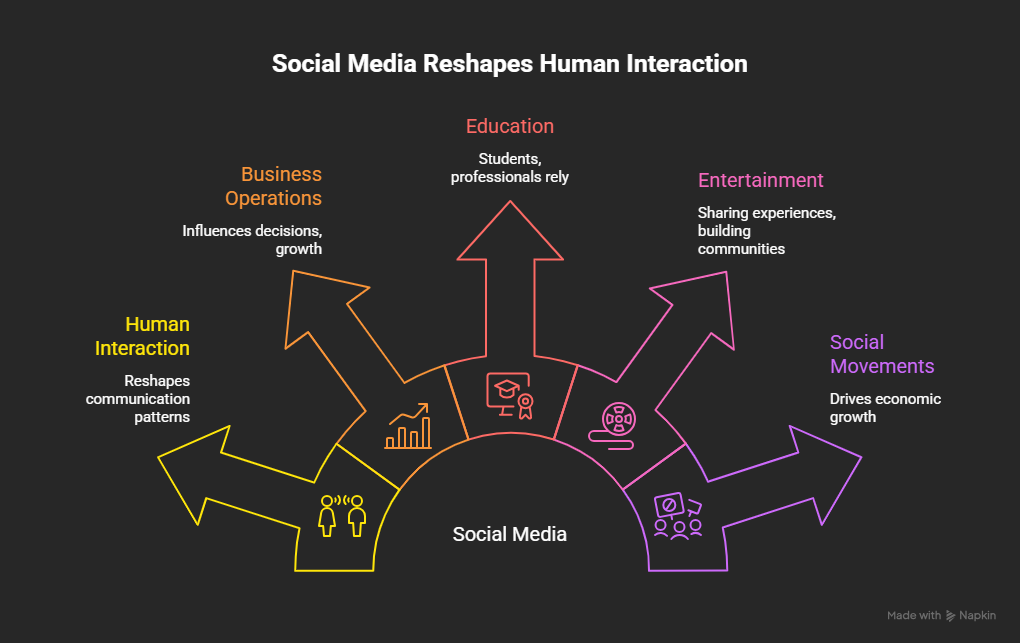
Over the last two decades, the digital world has undergone a remarkable transformation, and one of the most influential innovations has been Social Media. As a digital observer and researcher who has closely studied online behavior, communication patterns, and digital trends, I have witnessed firsthand how Social Media platforms have reshaped human interaction, business operations, education, entertainment, and even social movements.
Today, billions of people use Social Media platforms daily to communicate, learn, shop, share experiences, and build online communities. What began as simple networking websites has evolved into a powerful digital ecosystem that influences decisions, shapes opinions, and drives economic growth. From students and professionals to entrepreneurs and global corporations, people rely on Social Media for communication, networking, content sharing, and audience engagement.
This article explores the history, purpose, significance, applications, benefits, challenges, and future of Social Media while also highlighting how professional training institutes such as Dizital Mantras in Bareilly are preparing individuals for careers in this rapidly growing digital industry.
The impact of Social Media extends far beyond personal communication. These digital platforms have become powerful tools for knowledge sharing, brand promotion, customer engagement, professional networking, and public discourse. Individuals can access real-time information, discover new opportunities, and connect with like-minded communities regardless of geographical boundaries. Businesses leverage Social Media channels to understand consumer behavior, strengthen customer relationships, and compete in increasingly digital marketplaces. As technology continues to evolve, Social Media is playing an even greater role in shaping cultural trends, influencing purchasing decisions, and creating new opportunities for innovation, entrepreneurship, and career growth across industries worldwide.
What Is Social Media?
Social Media refers to digital platforms and applications that enable users to create, share, interact with, and exchange content within online communities and social networks. Unlike traditional media, which follows a one-way communication model, Social Media encourages two-way engagement where users actively participate in discussions, content creation, audience interaction, and relationship building.
Users can share photos, videos, articles, opinions, reviews, live broadcasts, and personal updates while connecting with audiences across geographical boundaries. The ability to communicate instantly and engage with others has made Social Media an essential part of modern digital communication.
The defining characteristic of Social Media is interaction. People are not merely consumers of content; they are also creators, contributors, and active participants in digital conversations. This user-generated approach has transformed how information is produced, distributed, and consumed across the internet.
Another important aspect of Social Media is its ability to foster collaboration and engagement on a global scale. Whether individuals are discussing current events, participating in educational groups, promoting creative work, or supporting meaningful causes, Social Media platforms provide spaces for interaction, networking, and knowledge exchange. These digital communities have significantly reduced communication barriers, allowing people from different cultures, backgrounds, and industries to connect instantly.
This level of accessibility has transformed how information spreads, how online communities are formed, and how individuals build personal and professional relationships in an increasingly connected digital environment. As technology continues to advance, Social Media remains a powerful tool for communication, collaboration, content sharing, and community engagement worldwide.
The Evolution of Social Media
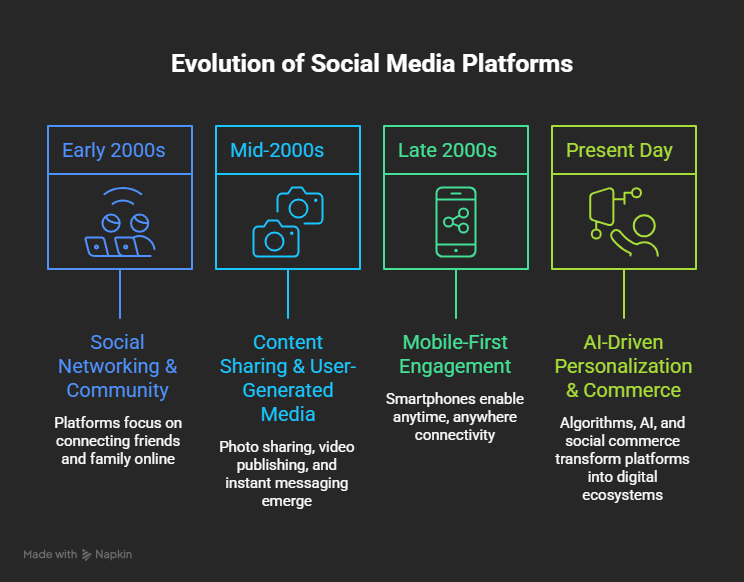
The evolution of Social Media has been fascinating and continues to shape the way people communicate, share information, and build relationships online.
During the early 2000s, Social Media platforms primarily focused on connecting friends and family. Early networking websites, online forums, and community portals allowed users to create profiles, interact with others, and participate in digital conversations. These platforms laid the foundation for the modern Social Media landscape.
As internet accessibility improved, new Social Media platforms emerged that introduced photo sharing, video publishing, instant messaging, and professional networking. The widespread adoption of smartphones further accelerated the growth of Social Media by enabling users to stay connected anytime and anywhere.
Today, advanced technologies such as artificial intelligence, personalized recommendations, live streaming, influencer marketing, and social commerce have transformed Social Media into a comprehensive digital ecosystem. These innovations have significantly improved content discovery, audience engagement, and user experiences across multiple platforms.
The evolution of Social Media can be summarized in four major phases:
- Social networking and community building
- Content sharing and user-generated content
- Mobile-first engagement
- AI-driven personalization and social commerce
This progression has fundamentally changed how people communicate, consume information, and engage with digital content.
Another significant development in Social Media has been the transition from simple online interactions to highly personalized digital experiences. Early platforms offered limited functionality, but continuous technological advancements introduced sophisticated features that improved content creation, audience targeting, and user engagement. Businesses, creators, educators, and organizations began leveraging Social Media to reach larger audiences, strengthen online communities, and build meaningful connections.
The rise of mobile technology further accelerated the growth of Social Media by making digital interaction accessible around the clock. As innovation continues, Social Media platforms are expected to evolve even further, offering smarter, faster, and more immersive ways for users to connect, learn, communicate, and share content in the future.
The Purpose of Social Media
The primary purpose of Social Media is to facilitate communication, interaction, and information exchange among individuals, businesses, and communities. However, the role of Social Media has expanded significantly over time, making it an essential part of modern digital life.
Today, Social Media platforms serve multiple purposes, including communication, networking, education, entertainment, content sharing, and business promotion. They provide users with opportunities to connect with others, discover valuable information, and participate in meaningful online conversations.
Modern Social Media platforms help users:
- Connect with individuals across the globe
- Build personal and professional relationships
- Share information instantly
- Create communities based on common interests
- Support education and online learning
- Promote businesses and brands
- Drive social awareness campaigns
- Provide entertainment and audience engagement
What makes Social Media unique is its ability to combine all these functions within a single digital environment. Users can communicate, learn, market products, build networks, and consume content without switching between multiple platforms.
Beyond communication and content sharing, Social Media has become a powerful tool for collaboration, relationship building, and digital engagement. Individuals use Social Media to discover new ideas, stay informed about current events, and participate in discussions that matter to them. Businesses leverage Social Media platforms to strengthen customer relationships, gather valuable feedback, improve brand visibility, and build customer loyalty.
Educational institutions also use Social Media to distribute learning resources, encourage student participation, and enhance communication between educators and learners. Nonprofit organizations and community groups utilize Social Media to raise awareness, mobilize support, and connect with broader audiences.
The versatility of Social Media allows users to accomplish multiple objectives within a single platform, making it an integral part of communication, digital marketing, professional networking, content creation, and everyday online experiences. As technology continues to evolve, the purpose of Social Media will expand even further, creating new opportunities for connection, collaboration, and innovation.
The Importance of Social Media in Modern Society
The importance of Social Media cannot be overstated in today’s interconnected world. These digital platforms have transformed the way people communicate, access information, build relationships, and engage with communities across the globe.
For individuals, these platforms provide opportunities to stay informed, maintain connections, and share creativity globally. Businesses leverage them for cost-effective marketing, brand visibility, and direct customer engagement across digital channels.
Governments and nonprofit organizations rely on online networks to distribute crucial updates instantly during emergencies. Similarly, educational institutions use these spaces to support virtual learning and encourage real-time collaboration among students.
As a powerful form of social media, their influence shapes how modern society consumes information and interacts with brands. Embracing this digital media ecosystem creates endless opportunities for innovation, global connectivity, and professional growth worldwide.
For organizations, they provide valuable insights into audience behavior and consumer preferences, helping improve decision-making and communication efforts. For individuals, they offer access to career opportunities, professional networks, and communities that support personal growth and development.
As digital connectivity continues to expand, these platforms will remain a driving force behind communication, commerce, education, and cultural exchange. Their growing role in society highlights the importance of understanding how digital networks influence modern life and shape future opportunities.
Popular Social Media Apps Around the World
Several platforms dominate the global digital landscape today. Each one offers unique features designed for communication, content sharing, entertainment, business promotion, and professional networking. Understanding their strengths can help individuals and organizations choose the right channels to connect with their target audience effectively.
Instagram and Visual Content Marketing
Known for visual storytelling, reels, short-form videos, and influencer collaborations, Instagram helps brands build strong audience engagement through creative content. Its visual-first approach makes it a valuable platform for brand promotion and community building. Many businesses use Instagram to increase visibility, strengthen customer relationships, and showcase products through engaging visual experiences.
Facebook and Online Communities
Facebook remains one of the largest networking platforms, offering extensive community-building features for individuals, businesses, and organizations. It supports groups, pages, events, and targeted advertising campaigns that help brands connect with their audiences. The platform continues to play an important role in digital communication, customer engagement, and online community development.
YouTube and Video Content Creation
YouTube is a leading video-sharing platform used for education, entertainment, tutorials, and marketing. Its powerful search capabilities and long-term content visibility make it a preferred choice for creators and businesses alike. Organizations use video content to educate audiences, demonstrate products, and establish authority within their industries.
LinkedIn for Professional Networking
LinkedIn focuses on career development, professional networking, recruitment, and industry discussions. Professionals use the platform to showcase expertise, expand their networks, and discover career opportunities. Companies also leverage LinkedIn for employer branding, talent acquisition, and thought leadership initiatives.
X (Formerly Twitter) and Real-Time Communication
X is widely recognized for real-time updates, discussions, and news sharing. It enables direct interaction between organizations, public figures, and audiences while encouraging fast-paced communication. Trending topics and live conversations help users stay informed about current events and industry developments.
Snapchat and Emerging Digital Trends
Popular among younger audiences, Snapchat focuses on temporary content sharing and interactive communication. Features such as Stories, augmented reality filters, and multimedia messaging create engaging user experiences. The platform continues to attract users seeking authentic and spontaneous content.
Pinterest as a Content Discovery Platform
Pinterest serves as a visual discovery platform where users explore ideas related to fashion, home décor, travel, lifestyle, and shopping. Businesses use it to drive website traffic, inspire purchase decisions, and increase product visibility. Its search-focused structure makes it particularly effective for content discovery and long-term audience engagement.
Each platform serves different audience needs and objectives. Choosing the right channel depends on factors such as target demographics, content strategy, marketing goals, and communication preferences. Understanding these differences helps individuals and businesses maximize their digital presence and achieve better engagement outcomes.
Social Media and Human Communication
One of the most significant impacts of modern digital platforms has been their influence on human communication. The way people connect, interact, and share information has changed dramatically over the past two decades.
Today, individuals can communicate instantly regardless of geographical location. Families remain connected across continents, professionals collaborate with colleagues worldwide, and communities form around shared interests, goals, and experiences. Digital connectivity has made communication faster, more accessible, and more efficient than ever before.
Features such as instant messaging, video calls, live streaming, voice chats, and group discussions have created new forms of interaction that were unimaginable just a few decades ago. These communication tools enable people to exchange ideas, share knowledge, and maintain relationships in real time.
The growth of online communication has also transformed how organizations, educators, and businesses interact with their audiences. Companies can engage directly with customers, provide support, gather feedback, and build stronger relationships through digital channels. Educational institutions use virtual discussions, online communities, and collaborative platforms to enhance learning experiences and improve student engagement.
The speed and convenience of digital communication have significantly changed how relationships are developed and maintained. Individuals can collaborate on projects, participate in professional networks, and exchange information without being limited by physical distance. This increased accessibility has encouraged greater collaboration across industries, cultures, and regions.
Communication technologies have also played a crucial role during global events, emergencies, and public awareness campaigns by enabling rapid information sharing. Real-time updates allow people to stay informed and connected during critical situations, helping communities respond more effectively to changing circumstances.
By reducing geographical barriers and encouraging continuous interaction, these digital platforms have created a more connected world. They have transformed the way people communicate, build relationships, exchange information, and participate in global conversations. As technology continues to evolve, digital communication will remain a fundamental part of personal, professional, and community engagement.
Social Media and Business Growth
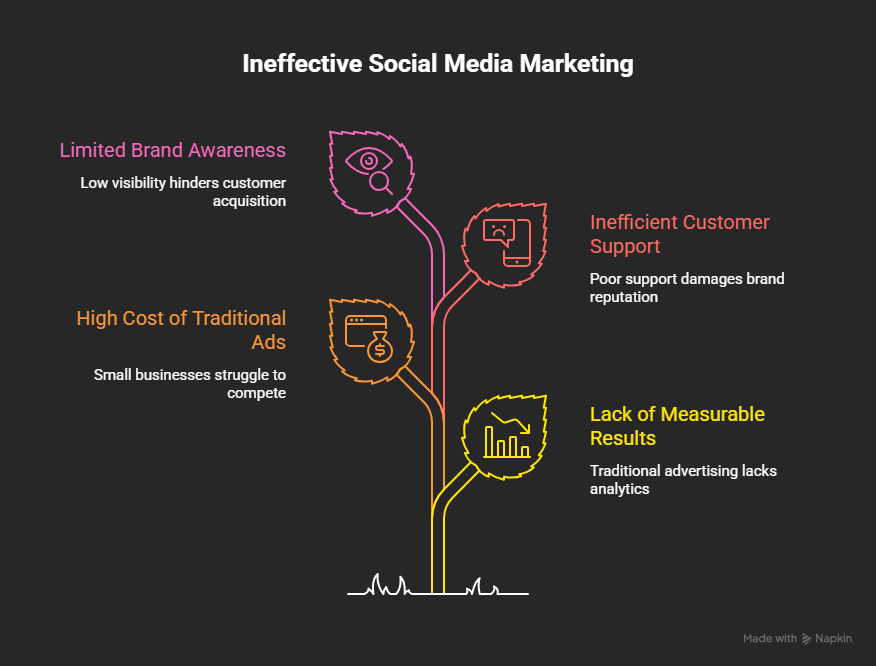
Businesses across industries have experienced significant growth through the effective use of digital platforms and online marketing strategies. These channels have transformed how organizations connect with customers, promote products, and build long-term brand value in an increasingly competitive marketplace.
Companies use these platforms to:
- Increase brand awareness
- Generate qualified leads
- Drive website traffic
- Build customer relationships
- Conduct market research
- Improve customer support
- Promote products and services
Unlike traditional advertising methods, digital campaigns provide measurable results through analytics and performance tracking. Businesses can monitor audience behavior, evaluate campaign effectiveness, and make data-driven decisions that improve marketing outcomes and maximize return on investment.
One of the biggest advantages of digital marketing is the ability to reach highly targeted audiences. Organizations can segment users based on demographics, interests, behaviors, and purchasing patterns, allowing them to deliver relevant content and personalized experiences. This targeted approach often leads to higher engagement rates and improved conversion opportunities.
Small and medium-sized businesses have benefited particularly from these marketing channels because they provide affordable alternatives to traditional advertising. With the right content strategy and audience engagement techniques, smaller brands can compete with larger organizations and establish a strong online presence without massive marketing budgets.
Another major benefit is direct customer interaction. Businesses can communicate with consumers in real time, respond to inquiries, address concerns, and gather valuable feedback. This ongoing interaction helps strengthen customer trust, improve satisfaction, and foster long-term loyalty.
Content creation has also become a critical component of modern business growth. Through videos, articles, live broadcasts, short-form content, and visual storytelling, organizations can educate audiences, demonstrate expertise, and position themselves as trusted industry authorities.
As consumer behavior continues to evolve, businesses that invest in digital engagement, customer experience, and data-driven marketing strategies are better positioned for sustainable growth. These platforms have become essential tools for expanding reach, strengthening relationships, and achieving long-term business objectives in the digital economy.
Social Media and Career Opportunities
The rapid growth of digital communication and online marketing has created a wide range of career opportunities across industries. As organizations continue to strengthen their digital presence, the demand for skilled professionals with expertise in content creation, audience engagement, branding, and digital strategy continues to rise.
Today, businesses, startups, agencies, educational institutions, and entrepreneurs actively seek professionals who can manage online communities, develop effective marketing campaigns, and build meaningful connections with target audiences.
Some of the most popular career paths in this field include:
- Digital Marketing Specialist
- Content Creator
- Community Manager
- Brand Strategist
- Influencer Marketing Specialist
- Paid Advertising Expert
- Video Content Producer
- Digital Communication Consultant
These roles require a combination of creativity, analytical thinking, communication skills, and technical knowledge. Professionals are often responsible for developing content strategies, managing campaigns, analyzing performance metrics, and improving audience engagement across multiple digital channels.
The increasing importance of online marketing has also created opportunities for freelancers and independent consultants. Many professionals offer services such as content development, campaign management, branding, advertising, and performance analysis to businesses around the world. This flexibility allows individuals to work remotely, build personal brands, and serve clients across different industries.
In addition to traditional employment opportunities, digital platforms have enabled creators, educators, and industry experts to generate income through content monetization, partnerships, consulting services, and online training programs. As a result, career options have expanded far beyond conventional marketing roles.
The growing demand for skilled professionals has also led to the emergence of specialized training institutes and certification programs that focus on practical, industry-relevant skills. These programs help learners understand current market trends, develop hands-on experience, and prepare for real-world challenges.
As businesses continue investing in digital transformation and customer engagement, career opportunities in this field are expected to grow significantly. Individuals who develop expertise in content strategy, branding, analytics, and digital communication can position themselves for long-term success in one of the fastest-growing sectors of the modern economy.
Social Media Marketing Training at Dizital Mantras
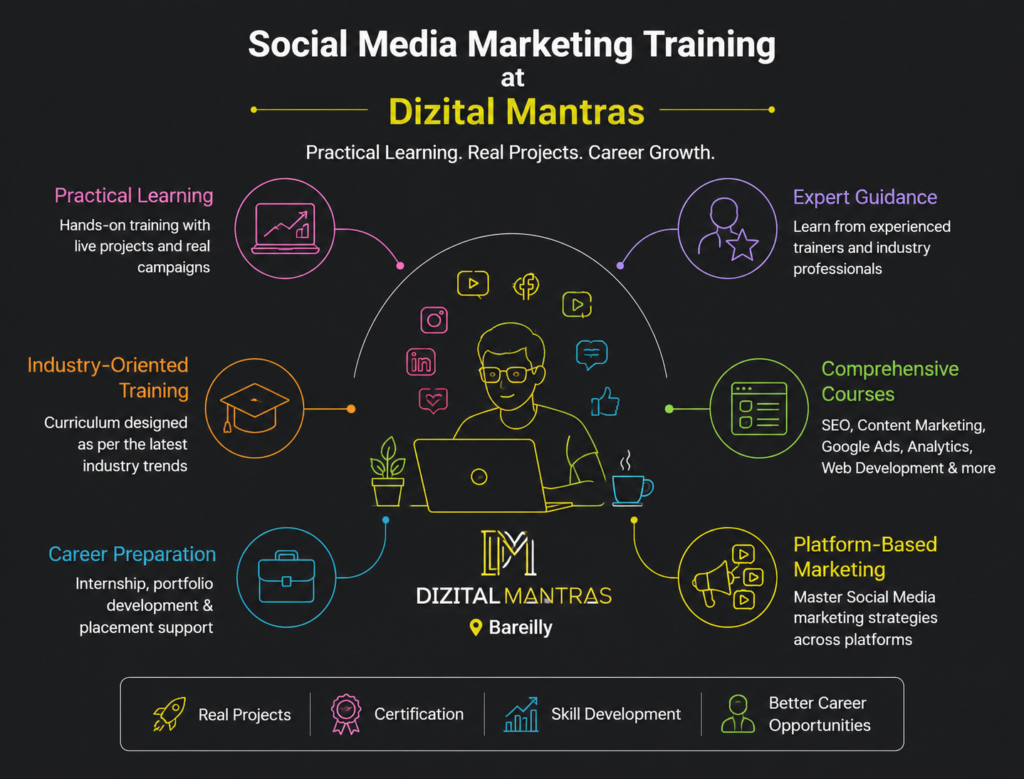
For individuals seeking professional training in digital marketing and platform management, Dizital Mantras in Bareilly has emerged as a recognized skill development institute. The institute focuses on practical learning, live projects, industry-oriented training, and career preparation. Students receive exposure to real-world campaigns and hands-on experiences rather than relying solely on theoretical concepts.
The institute offers training across various digital disciplines, including search engine optimization, content marketing, Google Ads, analytics, website development, branding, and online marketing strategies. This comprehensive approach helps learners develop a well-rounded understanding of the modern digital landscape.
Why Choose Dizital Mantras for Digital Marketing Training
Students often look for training institutes that combine practical experience with career support. Dizital Mantras emphasizes:
- Hands-on learning through live projects
- Industry-experienced trainers
- Updated curriculum aligned with current trends
- Internship opportunities
- Placement assistance
- Portfolio development
- Freelancing guidance
- Resume-building support
These features help learners gain practical exposure, build confidence, and become job-ready in a competitive professional environment.
What the Course Covers
The training modules include several important areas that are essential for building successful digital marketing careers. According to the published curriculum, students learn:
- Content strategy development
- Audience engagement techniques
- Instagram marketing
- Facebook marketing
- Branding strategies
- Paid promotions and advertising
- Video and reels marketing
- Analytics and performance tracking
- Community management
- Campaign optimization
In addition to platform-specific skills, learners gain exposure to broader marketing concepts that strengthen their ability to manage campaigns, analyze results, and improve online visibility.
Industry-Focused Learning Approach
Dizital Mantras aims to prepare students for modern career opportunities by focusing on practical, industry-relevant skills. The institute recognizes that organizations increasingly depend on digital channels for customer acquisition, brand building, and business growth.
Its training methodology emphasizes real-world application, enabling learners to understand current market demands and develop skills that can be applied in employment, freelancing, entrepreneurship, and business promotion. By combining strategy, creativity, analytics, and hands-on practice, students are better equipped to succeed in today’s evolving digital economy.
Why Choose Dizital Mantras for Digital Marketing Training
Students often look for training institutes that combine practical experience with career support. Dizital Mantras emphasizes:
- Hands-on learning through live projects
- Industry-experienced trainers
- Updated curriculum aligned with current trends
- Internship opportunities
- Placement assistance
- Portfolio development
- Freelancing guidance
- Resume-building support
These features help learners gain practical exposure, build confidence, and become job-ready in a competitive professional environment.
What the Course Covers
The training modules include several important areas that are essential for building successful digital marketing careers. According to the published curriculum, students learn:
- Content strategy development
- Audience engagement techniques
- Instagram marketing
- Facebook marketing
- Branding strategies
- Paid promotions and advertising
- Video and reels marketing
- Analytics and performance tracking
- Community management
- Campaign optimization
In addition to platform-specific skills, learners gain exposure to broader marketing concepts that strengthen their ability to manage campaigns, analyze results, and improve online visibility.
Industry-Focused Learning Approach
Dizital Mantras aims to prepare students for modern career opportunities by focusing on practical, industry-relevant skills. The institute recognizes that organizations increasingly depend on digital channels for customer acquisition, brand building, and business growth.
Its training methodology emphasizes real-world application, enabling learners to understand current market demands and develop skills that can be applied in employment, freelancing, entrepreneurship, and business promotion. By combining strategy, creativity, analytics, and hands-on practice, students are better equipped to succeed in today’s evolving digital economy.
Why Choose Dizital Mantras for Social Media Marketing
Students often look for training institutes that provide practical experience and career support. Dizital Mantras emphasizes:
- Hands-on learning through live projects
- Industry-experienced trainers
- Updated curriculum aligned with current trends
- Internship opportunities
- Placement assistance
- Portfolio development
- Freelancing guidance
- Resume-building support
These features help learners gain practical exposure and become job-ready in a competitive digital environment.
What Dizital Mantras Offers in Its Social Media Marketing Course
The institute’s training modules cover several important areas of Social Media marketing. According to its published curriculum, students learn:
- Content strategy development
- Audience engagement techniques
- Instagram marketing
- Facebook marketing
- Branding strategies
- Paid promotions and advertising
- Video and reels marketing
- Analytics and performance tracking
- Community management
- Campaign optimization
Additionally, students gain exposure to broader digital marketing disciplines that complement platform management skills.
Why Dizital Mantras Offers Social Media Marketing Training
Dizital Mantras aims to prepare students for modern digital careers by focusing on practical, industry-relevant skills. The institute recognizes that businesses increasingly depend on digital channels for growth and customer acquisition.
Its training philosophy emphasizes real-world application, helping learners understand current market demands and develop skills that can be applied in employment, freelancing, entrepreneurship, and business promotion.
Challenges of Social Media
Despite its many advantages, Social Media also presents several challenges that affect individuals, businesses, and communities. While digital platforms have improved communication, accessibility, and information sharing, they have also introduced concerns that require responsible usage and greater awareness.
Some of the most common challenges include:
- Misinformation and fake news
- Privacy concerns
- Cyberbullying and online harassment
- Digital addiction
- Mental health issues
- Data security risks
One of the most significant concerns is the rapid spread of inaccurate or misleading information. Because content can be shared instantly, false claims and unverified reports often reach large audiences before they can be fact-checked. This can influence public opinion, create confusion, and contribute to the spread of misinformation.
Privacy and data protection have also become major concerns in the digital age. Users frequently share personal information online, sometimes without fully understanding how that data may be collected, stored, or used. As a result, maintaining digital privacy has become increasingly important for both individuals and organizations.
Cyberbullying and online harassment continue to affect users across different age groups. Negative interactions, harmful comments, and abusive behavior can impact emotional well-being and create unsafe online environments. Promoting respectful communication and responsible online behavior remains essential for building healthier digital communities.
Another challenge is excessive screen time and digital dependency. Continuous access to online content can sometimes affect productivity, concentration, and personal relationships. Maintaining a healthy balance between online activities and offline experiences is important for overall well-being.
Mental health has become an increasingly discussed topic in relation to digital engagement. Constant exposure to curated content, comparisons, and online validation can influence self-esteem and emotional health. Developing healthy usage habits and maintaining realistic expectations can help reduce these negative effects.
Security risks also remain a concern. Users may encounter phishing attempts, scams, fraudulent accounts, and other forms of cybercrime. Understanding basic cybersecurity practices can help individuals protect their personal information and navigate digital spaces more safely.
As technology continues to evolve, addressing these challenges will require a combination of digital literacy, critical thinking, responsible platform usage, and effective security measures. By understanding potential risks and adopting healthy online habits, users can benefit from digital connectivity while minimizing its negative effects.
The Future of Social Media
The future of Social Media is expected to be driven by emerging technologies such as artificial intelThe Future of Social Media
The future of digital networking platforms is expected to be shaped by rapid technological advancements, changing user expectations, and evolving online experiences. As innovation continues to accelerate, these platforms are likely to become more intelligent, immersive, and personalized than ever before.
Emerging technologies such as artificial intelligence, augmented reality, virtual reality, machine learning, and advanced data analytics are already influencing how users discover content, interact with communities, and engage with brands. These innovations are helping create more relevant, efficient, and interactive digital experiences.
Future developments may include:
- More immersive virtual experiences
- AI-powered content creation assistance
- Enhanced shopping and e-commerce integrations
- Improved creator monetization opportunities
- Greater personalization
- Advanced customer engagement systems
Artificial intelligence is expected to play an increasingly important role in content recommendations, audience analysis, customer support, and automation. AI-driven tools can help users discover relevant information more efficiently while enabling businesses and creators to better understand audience preferences and behavior.
Augmented reality and virtual reality technologies may transform online interaction by creating immersive environments where people can communicate, learn, shop, and collaborate in entirely new ways. These experiences could significantly change how individuals engage with digital content and virtual communities.
Content creators are also expected to benefit from improved monetization tools and new revenue opportunities. As digital economies continue to grow, platforms will likely introduce more sophisticated ways for creators to earn income through subscriptions, partnerships, premium content, and community-driven support.
Personalization will remain a major focus in the years ahead. Advanced algorithms and machine learning systems will continue refining content delivery, helping users access information, products, and services that align more closely with their interests and needs.
Businesses are expected to benefit from smarter analytics, automation tools, and customer engagement solutions that improve marketing performance and strengthen relationships with consumers. These innovations will help organizations create more meaningful and efficient digital experiences.
As technology continues evolving, digital platforms will become even more integrated into daily life, influencing communication, education, entertainment, commerce, and professional networking. Their ongoing development will create new opportunities for innovation, collaboration, and global connectivity, shaping the future of how people interact in an increasingly connected world.
Conclusion: The Lasting Impact of Social Media
The influence of Social Media extends far beyond communication. It has transformed how people connect, learn, conduct business, consume information, and build careers. What began as a simple way to connect with others has evolved into a powerful digital ecosystem that influences nearly every aspect of modern life.
Today, digital platforms play a vital role in communication, education, marketing, entertainment, professional networking, and community building. They have created opportunities for individuals to share knowledge, expand their networks, discover new ideas, and engage with audiences across geographical boundaries.
For businesses, these channels have become essential tools for brand building, customer engagement, market research, and business growth. Organizations can reach targeted audiences, strengthen customer relationships, and adapt more effectively to changing consumer behavior in an increasingly connected world.
At the same time, the continued growth of digital communication has created new career opportunities across content creation, branding, analytics, advertising, and digital marketing. Professionals who develop expertise in these areas can benefit from the growing demand for skilled talent in the digital economy.
While challenges such as privacy concerns, misinformation, and online security remain important considerations, the benefits continue to drive widespread adoption. Responsible usage, digital literacy, and continuous learning will play a key role in helping individuals and organizations maximize the value of these platforms.
For aspiring marketers, entrepreneurs, content creators, and professionals, developing practical skills through industry-focused training programs can open doors to new opportunities. Institutions such as Dizital Mantras help learners build the knowledge, experience, and confidence required to succeed in today’s competitive digital landscape.
As technology continues to evolve, digital platforms will remain a powerful force driving innovation, connectivity, collaboration, and economic growth. Those who understand how to leverage these tools effectively will be better positioned to thrive in an increasingly digital future.
1. What is Social Media?
Social Media refers to digital platforms and applications that allow users to create, share, and interact with content while connecting with individuals, communities, and organizations online. These platforms support communication, networking, collaboration, and information exchange across the world.
2. Why is Social Media important in today’s world?
These digital platforms play a significant role in communication, education, marketing, networking, and information sharing. They help individuals stay connected, access real-time updates, discover learning opportunities, and engage with global audiences more effectively.
3. What are the most popular platforms?
Some of the most widely used platforms include Instagram, Facebook, YouTube, LinkedIn, X (formerly Twitter), Snapchat, and Pinterest. Each serves different purposes, ranging from content sharing and professional networking to entertainment and community engagement.
4. How do digital platforms help businesses grow?
Businesses use online channels to increase brand awareness, generate leads, engage customers, drive website traffic, and promote products or services. These tools also provide valuable analytics that help organizations improve marketing performance and make informed decisions.
5. What are the benefits of digital marketing through these platforms?
Digital marketing helps businesses reach targeted audiences, improve customer relationships, increase online visibility, and measure campaign performance. It also allows organizations to communicate directly with consumers and build stronger brand loyalty.
6. What career opportunities are available in this field?
Popular career options include Digital Marketing Specialist, Content Creator, Community Manager, Brand Strategist, Paid Advertising Expert, Video Content Producer, and Influencer Marketing Specialist. Demand for these roles continues to grow as businesses expand their digital presence.
7. What challenges are associated with these platforms?
Common concerns include misinformation, privacy issues, cyberbullying, data security risks, excessive screen time, and mental health challenges. Developing digital literacy and responsible online habits can help users navigate these issues more effectively.